
The Son
Overview
The Son, published in Norwegian in 2014 as Sønnen, is a crime thriller by Jo Nesbø. It is a standalone novel rather than an installment in the Harry Hole detective series, although it shares the bleak urban atmosphere and interest in institutional wrongdoing that characterize much of Nesbø’s crime fiction. Oslo is more than a backdrop: prisons, police, courts, political influence, business interests, and the criminal underworld form a network in which power can blur the distinction between justice and its imitation.
The novel centers on Sonny Lofthus, a heroin-addicted prisoner who has been incarcerated since he was eighteen. He maintains his drug habit by accepting responsibility for crimes committed by other people. Fellow inmates confess their sins to him, and his quiet charisma earns him an almost saintly reputation; some believe he has the grace to absolve them. Yet the apparent choice to bear other people’s guilt is also useful to people outside prison. A corrupt system makes Sonny a convenient scapegoat, shielding powerful figures from the consequences of their violence.
Sonny’s late father, Ab Lofthus, was a policeman, believed to have taken his own life after being exposed as a corrupt officer. Simon Kefas, Ab’s close friend and former colleague, enters the story while investigating a murder connected to Sonny. As the past begins to connect with the present, Sonny escapes from prison. He seeks the truth about his father and sets out to avenge the people who have harmed him and his family. The plot moves between escape, investigation, and revenge, while gradually revealing the motives behind the central characters’ actions and the relationship between Sonny and Simon. The question is not simply who committed particular crimes, but how guilt is assigned, concealed, or exploited by those with influence.
Themes and narrative approach
Father and son, law and justice, and revenge are among the novel’s defining concerns. Sonny’s inherited grief and his understanding of his father’s death shape his own damaged life; revisiting that history gives the plot both an investigative purpose and an emotional center. The book’s account of corruption is systemic rather than limited to one dishonest individual: politicians, business interests, police, courts, and criminal operators are shown moving within overlapping circles of power. Sonny is a criminal, but he is also a person manipulated by people better placed to evade the law. That tension invites sympathy without making his retaliatory violence morally simple.
The prison setting also gives the story an unusual inversion of the conventional confession. Inmates disclose their sins to Sonny, granting him a quasi-spiritual authority, yet this role does not free him or restore his life. His perceived saintliness exists alongside addiction and violence, making him an unstable figure rather than a straightforward avenger or redeemer. Nesbø combines that moral ambiguity with a strongly propulsive thriller structure. Critical responses have differed: some praise the narrative flair, momentum, and gradual revelation of character motives, while one prominent review questioned the plausibility of the setup and found the conclusion predictable. The contrast captures the book’s appeal and its points of contention: it is designed to pull readers through a high-stakes plot, but its ethical and emotional questions extend beyond the mechanics of the chase.
Background and standing
The Son appeared after Nesbø had become internationally known for the Harry Hole novels. By choosing a prisoner and an older policeman as the principal figures, he stepped outside that series while retaining familiar interests in urban crime, compromised institutions, and the unstable boundary between justice and vengeance. Available accounts do not identify a specific real-life event as the novel’s point of origin. Its creative background is better understood through the recurring concerns visible in Nesbø’s work—especially father-son bonds, corruption, retribution, and the consequences of violence—recast in a self-contained story.
The novel’s lasting place in Nesbø’s body of work rests in part on that independence: readers can encounter its story without following Harry Hole, while still recognizing the author’s command of noir atmosphere and suspense. Reviews have described it as gripping and memorable, and it has also been criticized for implausibility. That mixed response does not erase its significance as a substantial standalone crime novel. The Son shows Nesbø applying the machinery of the thriller to a story in which the apparent criminal may also be a victim of powerful institutions, and in which revenge can expose corruption without necessarily resolving the question of justice.
About the Author
Early life and education
Jo Nesbø was born in Oslo, Norway, on 29 March 1960. A novelist and musician, he grew up in a family with a strong interest in reading and storytelling. His mother worked as a librarian, and his father regularly read and told stories at home. Nesbø has recalled inventing frightening stories as a child, though football was his earliest consuming ambition. At seventeen he appeared for Molde, a Norwegian football club, and hoped to pursue a professional career. A knee ligament injury ended that plan.
After leaving football, Nesbø completed military service in northern Norway. During that period he made up for his unfinished secondary-school studies and read widely, eventually earning his school qualification. He went on to study economics and business administration at the Norwegian School of Economics. While at university he became involved in music, and after graduating he moved to Oslo and worked in finance as a financial analyst. Finding that work unsatisfying, he wrote songs and pursued music with the band Di Derre. The group became successful in Norway, and Nesbø first attracted public attention as a musician.
From music to crime fiction
After the band’s success, Nesbø took time away from the demands of performing and travelled to Australia. He had initially considered writing a book about the band, but the journey prompted him to begin a novel instead. His first book, The Bat, was published in 1997 and introduced the detective Harry Hole. It won Norway’s Riverton Prize for crime fiction and the Glass Key, the award for the best Nordic crime novel, bringing early recognition to Nesbø as a crime writer. He increasingly concentrated on writing while continuing to identify as a musician.
The Harry Hole series became his best-known body of work. Its major titles include Cockroaches (1998), The Redbreast (2000), The Snowman (2007), The Leopard (2009), Phantom (2011), Police (2013), The Thirst (2017), and Knife (2019). The books follow a brilliant but troubled detective through investigations that are closely bound up with his private life and personal losses. Nesbø has also written standalone crime fiction. The Son (2014), for example, follows Sonny Lofthus and the older policeman Simon Kefas rather than Harry Hole, while retaining the author’s interest in father-son relationships, corruption, justice, and revenge. His work also includes fiction beyond the Hole novels and books for readers outside the adult crime-fiction audience.
Reputation
Writing in Norwegian, Nesbø has built a large international readership through translations of his novels. He is among Norway’s most commercially successful authors, and his reputation is particularly associated with the Harry Hole books and the international popularity of Nordic noir. His early recognition through the Riverton Prize and the Glass Key was followed by an extensive career in which recurring detective fiction and self-contained novels alike explore violent crime, compromised institutions, and morally difficult choices. His books had sold more than 50 million copies worldwide by 2021.
Nesbø was born in 1960 and is living; there is therefore no date of death. His lasting standing reflects not only the scale of his readership but also the consistency with which he has developed a recognizable crime-fiction world while moving between a long-running detective series and independent stories. His path from football and financial analysis to the success of Di Derre and an international writing career is unusually varied. The childhood environment he describes—especially a librarian mother, a reading father, and family storytelling—offers a useful counterpoint to the music and professional careers that preceded his first novel.
StoryFlow
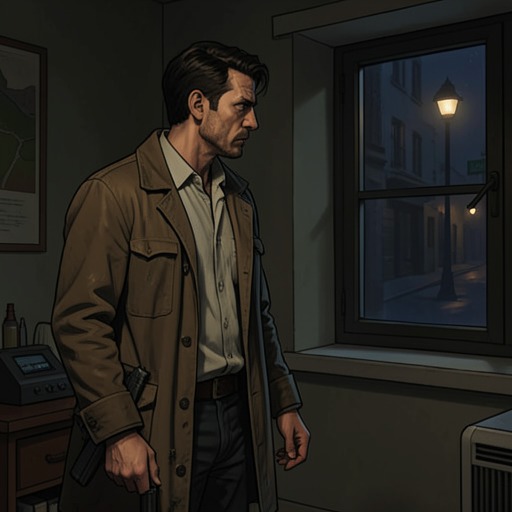
Rover’s Attempt at a Clean Start
This thread follows Gustav Rover from confessing a violent crime and surrendering a hidden weapon to choosing whether to risk his hoped-for new life by helping Sonny Lofthus.
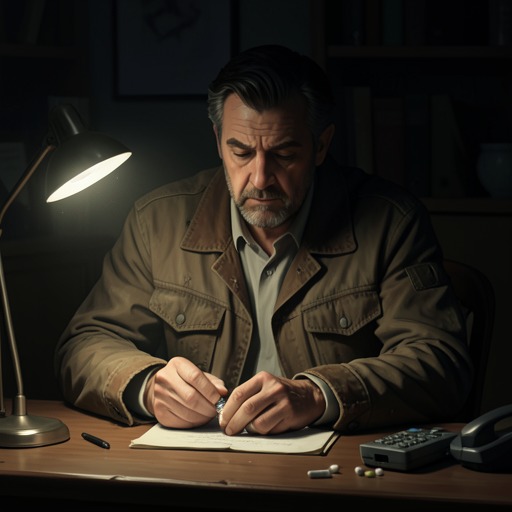
Johannes Halden’s Last Confession
This thread traces Johannes Halden’s buried role in the murder of Ab Lofthus, his attempt to help Sonny escape, and his final surrender to illness and addiction.
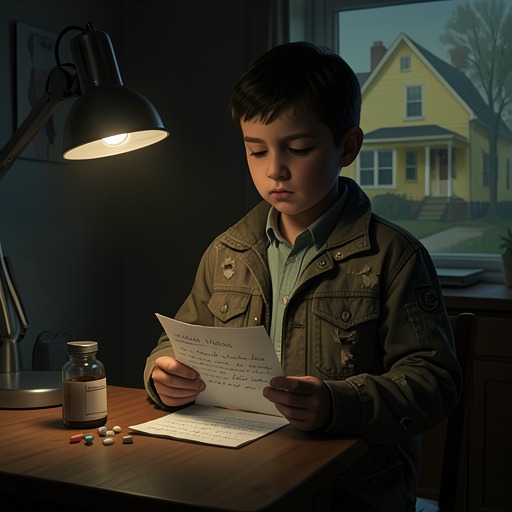
Markus’s Watchful Witness
This thread follows Markus Engseth as a solitary child turns his curiosity about the abandoned yellow house into an increasingly consequential, if incomplete, witness account.
